
How to Tell an Event’s Story that Captivates Audiences
Introduction: Two Event Video Worlds
Event video coverage can mean two very different things.
One gives you a clean recap that says, “Here’s what happened.” The other turns the event into a story that helps people feel why it mattered.
That difference matters when your team needs more than proof of attendance. In this comparison, we’ll look at format, workflow, distribution value, and ROI so you can decide which approach fits your next event. Event Video Coverage
What We Are Comparing Here
Traditional Coverage Means Fast Recap
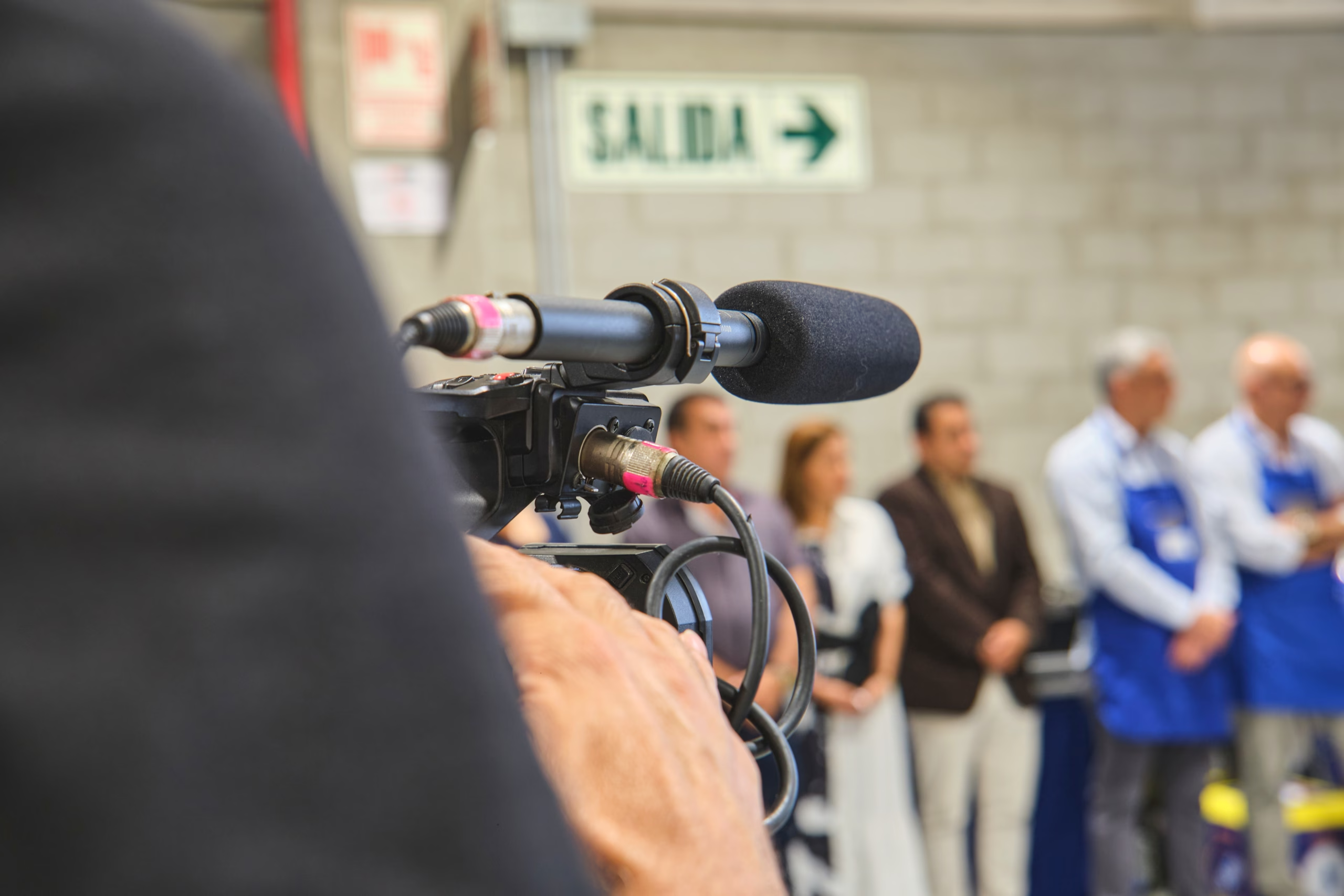
Traditional event video coverage usually follows a simple pattern: walk-in shots, b-roll, speaker highlights, crowd moments, signage, and a quick edit. It is built to document the day clearly and fast.
That works well for internal recaps, archival needs, or basic event proof. If the goal is speed and simple documentation, this format can do the job.
Documentary Style Means Story First
Documentary-style storytelling starts with people, tension, and outcomes instead of a shot list. It looks for the reason the event exists, then builds a beginning, middle, and end around that purpose.
Instead of trying to cover everything, it follows a few key moments and lets the audience feel the stakes. That creates assets that can live beyond one recap post.
The Real Comparison Criteria
The better comparison is not “which looks nicer.” It is emotional pull, brand clarity, edit flexibility, and distribution value.
For Event Video Coverage, turnaround speed matters. Additionally, it hinges on stakeholder approval and whether the cut can support paid social, YouTube, and organic channels. However, the right choice depends on after-event goals, not just on what it proves on the day.
Traditional Event Coverage Strengths And Limits
Step 1. Capture The Basics Quickly
Traditional event coverage is strong at covering the essentials. It captures the venue, crowd movement, speakers, signage, and key moments without slowing the team down.
For a standard recap or a simple record of the event, that speed matters. It also lowers risk when the assignment is documentation instead of campaign content.
Step 2. See Where It Falls Short
The problem is that recap-first edits often miss emotion. They show the sequence of the event, but not the tension, anticipation, or human connection that made it worth filming in the first place.
That can leave the final cut feeling generic. It may be fine for one post, but it often underperforms when the brand wants retention, shares, or a cut that can be reused across channels.
Meta’s own guidance on Reels ads makes the point clearly: short-form vertical creative has to feel native and built for attention. A simple recap usually does not give you enough story density for that.
Step 3. Notice The Hidden Cost
A one-and-done recap can also become expensive in a way teams do not expect. Once the first video is used, the brand still needs paid cuts, organic clips, sales assets, and maybe a website edit.
That means more edits, more budget, and more coordination with vendors. When a single event needs to feed paid, organic, and internal teams, a recap-only plan usually creates more work later.
Documentary Style Storytelling Works Better
Step 1. Build A Clear Story Arc
Documentary-style event video coverage begins with the why. What problem is the event solving? What opportunity is on the line? What should the viewer understand by the end?
From there, the edit can follow a few people instead of trying to capture every corner of the room. That gives the story a hook, which matters even more for viewers who were not there in person.
Step 2. Capture Human Moments
The strongest moments in event video are often not the keynote slides. They are the reactions, hallway conversations, nervous laughs before a presentation, or the small win that nobody planned for.
Those in-between moments make the event feel real. They also help brands communicate trust, culture, and momentum without sounding overly polished or scripted.
That is why documentary-style storytelling tends to stick. It shows proof of people, not just proof of production.
Step 3. Repurpose Into Marketing Assets
This is where documentary style pulls ahead. One well-planned shoot can produce a hero film, speaker snippets, social clips, email assets, and LinkedIn cuts that all come from the same footage.
That matters because versioning improves ROI. A single production day can become multiple lengths and aspect ratios for Meta, YouTube, and organic distribution, which is exactly what teams need when budgets are tight.
Google’s creative guidance for performance marketing backs this up. Clear messaging, mobile-first creative, and multiple assets matter more than a single polished cut.
If you want that approach built into the process from the start, Dancing Pixel plans events so the footage becomes multiple testable assets, not just one recap reel. That means the shoot is designed around outputs, not just coverage.
Side By Side: Which Format Wins Where?
Brand Perception And Memory
Traditional coverage informs. Documentary storytelling persuades.
A recap tells people the event happened, but a story-led edit helps them remember what the brand stands for. That matters when you need long-term recall, not just a nice-looking post that disappears in a feed.
It also helps internally. Brand leads and executives usually respond better when the video shows a clear point of view instead of a montage with no narrative spine.
Distribution And Performance
For Meta ads, YouTube, organic social, and website embeds, documentary-style cuts usually have the edge. They give you stronger openings, more emotional pace, and cleaner ways to shape multiple versions for different channels.
On YouTube, story-driven ad guidance and campaign optimization tips both point toward shorter edits and creative variation. YouTube setup guidance also makes it clear that outputs should be planned with distribution in mind.
If your team is building video campaigns, YouTube analytics gives you the performance signals you need to compare versions. That makes story-led event video coverage a better fit for testing and learning than a single recap made after the fact.
Budget, Speed, And Workflow
Traditional coverage can look cheaper upfront because the edit is simpler. But if the only usable output is one recap, the cost per useful asset can climb fast.
Documentary planning may require more intent before the shoot, but it usually makes the workflow cleaner. Teams know what they are getting, approvals move faster, and the edit is easier to defend because the deliverables were defined before the cameras rolled.
For review and approval, tools like Frame.io’s workflow guide and client approval tips are useful reminders that clarity early saves pain later.
Why Dancing Pixel Fits This Approach
Local Crew, Faster Turnaround
For regional brands, local responsiveness is not a nice-to-have. It can be the difference between getting usable footage from a live event and missing the window entirely.
Because Dancing Pixel is Pittsburgh-based, the team can move quickly on-site, adapt to live changes, and keep turnaround realistic for marketing teams with short launch windows. That matters when a campaign, event, or product push cannot wait two weeks for the first cut.
Marketing-First Editing Choices
Dancing Pixel does not treat the edit as a final polish step only. The footage is shaped into KPI-friendly variants that can be tested across channels, with captions, aspect-ratio versions, and platform-specific cuts built in.
That is a better fit for brands that need measurable video assets, not just a pretty master file. It also supports the bigger promise: turning local moments into marketing wins that can be tracked and improved.
One Shoot, Many Uses
The same event can create a hero story, social clips, speaker highlights, sponsor-ready assets, and internal recap content. That makes the production day work harder without forcing your team to start over after launch day.
If you want a simple model for repurposing, Wistia’s video repurposing cookbook and its guide on repurposing video content show how one source asset can become many. Wistia’s live events guide points in the same direction: live moments should keep working after the room clears.
That is where Dancing Pixel’s showreel-driven, full-service production model fits regional brands well. The goal is not just to cover the event. It is to turn the event into a content system.
Frequently Asked Questions About Event Coverage
What is event video coverage?
Event video coverage is the process of filming an event so you have an edited record of what happened. It can be a simple recap, or it can be built into a more strategic story for marketing, internal comms, or promotion.
Is documentary style more expensive?
It can cost more in planning, but often less per usable asset. A single shoot can produce multiple deliverables, so the budget should be judged by total output value, not just the shoot day.
Can you still show speakers and venue?
Yes. Documentary storytelling does not remove the basics. It uses speakers, venue shots, and sponsor details as context, but it gives them a stronger narrative job.
How fast can turnaround be?
A tightly scoped pilot can move quickly if the edit is planned before the event. Clear review steps also help, especially when teams use tools like Frame.io capture, review, deliver to speed up collaboration.
What should I ask a production partner?
Ask about deliverables, versioning, distribution planning, revision limits, and measurement. You should also ask how they handle local crew support and whether they have examples of assets that worked on paid and organic channels.
When should I choose traditional coverage instead?
Choose traditional coverage when you mainly need a clean record of the event and nothing else. If the video only needs to prove attendance, document speakers, or support an internal archive, a recap is usually enough.
Can one event video support paid and organic channels?
Yes, if the shoot is planned that way from the start. That is the main advantage of documentary-style event video coverage: one production day can produce a hero cut, short social versions, and channel-specific edits without starting over.
Conclusion: Choose The Format That Drives Action
Event video coverage is useful, but it is only the starting point. If you need a fast recap, traditional coverage can work. If you need reusable marketing assets that support emotion, memory, and performance, documentary-style storytelling usually delivers more value.
That is the real decision: do you want a record of the event, or do you want a content system that keeps working after the lights go down? For brands that need fast, local execution with measurable outputs, Dancing Pixel is built for that kind of pilot.

Write a Comment